

In the wake of geopolitically driven disruption across supply chains, cyber, contracts, and capital, insurance can no longer be treated as a cost line in 2026. It’s a capital strategy that protects operations and continuity.
In part one and part two, Aliya Daya, Senior Client Executive, Commercial Insurance, explains why geopolitics have become an operational constraint and how to manage it. To wrap up her three-part series, Aliya draws from her 25 years of experience advising businesses on insurance and risk management, to explain how a risk transfer stack can protect continuity and decision-making.
Note: This is part three of a three-part series on how to manage geopolitical risk in 2026.
In part one, I reframed geopolitics as an embedded operating condition for Canadian organizations, not a periodic external shock. Part two laid out the practical architecture: integrate geopolitical scenarios into enterprise risk management (ERM), stress-test supply chains, align cyber with geopolitical intelligence and elevate governance.
This third article is about the part that tends to get flattened into “renewal season admin:” risk transfer.
In a geopolitical era, insurance isn’t just a cost line. It’s part of how you protect cash flow, protect decision-making and preserve the ability to execute strategy when the rules change mid-quarter.
The angle here is deliberately Canadian and deliberately strategic: think of insurance as a risk transfer stack (a set of layers that match different geopolitical loss pathways) built for Canada’s unique position:
- deep U.S. integration
- allied alignment
- resource intensity (energy and critical minerals)
- increasing exposure through tech/data-driven services
The World Economic Forum’s current framing reinforces why this matters: geopolitical / geoeconomic risks act as systemic amplifiers that connect and compound risks across domains rather than staying neatly siloed.
Canadian business case study: How geopolitical risk shows up in everyday operations
A Canadian founder I work with once described their risk environment like this: “We’re not ‘international.’ We just sell to the U.S., use a global cloud provider and have a couple overseas suppliers. That’s not geopolitical.”
And that’s the trap. In this operating environment, geopolitics doesn’t require a flag on the invoice. It arrives through:
- A supplier delay caused by trade friction or transport disruption
- A ransomware campaign that spikes around geopolitical tension
- A sanction update that changes who can pay whom and how
- A sudden increase in the cost of capital when markets demand a higher risk premium

The Bank of Canada has explicitly highlighted that geopolitical escalation can disrupt supply chains and commodity markets and that financial markets may demand higher risk premiums, raising borrowing costs and weakening confidence.
So, the question isn’t “Do we have insurance?” It’s: “Do we have a risk transfer stack designed for the way geopolitical loss actually manifests in Canada?”
Why Canadian businesses need a layered insurance approach to respond to geopolitical risks
In a stable world, “coverage shopping” can look like competence. In a fragmented world, it becomes fragile.
A risk transfer stack is a layered approach that matches different loss pathways, different time horizons and different stakeholders. It recognizes that not all risks should be transferred and not all risks can be transferred, especially when events are correlated.

Layer 0: The retained layer (your volatility budget)
Before we touch insurance, we need honesty: what volatility can the organization absorb without distorting decisions?
This is where CFOs and boards should pay attention. Retentions are not just pricing levers. They are your self-insured shock absorber, and they matter more when borrowing costs and risk premiums move.
Board-level question: If we had a bad 30 days (cyber disruption + supplier delay + customer penalties) how much can we fund internally before we’re making reactive, expensive decisions?

Layer 1: High-frequency operational resilience insurance
This layer covers the risks that show up most often in modern Canadian operating environments, where the goal is not “catastrophe funding,” but continuity and response speed.
Cyber: response infrastructure plus balance-sheet protection
Cyber remains the top ranked global business risk in Allianz’s Risk Barometer 2026 (highest-ever score, 42%). Canada’s National Cyber Threat Assessment underscores that Canadian organizations face an evolving threat landscape involving both state and non-state actors.
In the stack, cyber insurance is less about “if we get hacked” and more about pre-negotiated access to capability:
- Incident response vendors
- Breach counsel
- Forensics
- Crisis communications
- Funding for immediate containment/restoration
This is especially important for Canadian firms with cross-border customers and data dependencies, where incident handling rapidly becomes a governance and stakeholder confidence issue.
Crime / social engineering / funds transfer risk
Geopolitical periods tend to correlate with disinformation, impersonation and sophisticated social engineering, especially around payments, vendor changes and executive approvals.
This layer is not glamorous, but it is one of the most practical forms of continuity protection.

Layer 2: Liability and governance protection (where leadership scrutiny lives)
This is the “your decision-making will be judged later” layer.
Directors and officers (D&O): protecting decision-makers in uncertainty
Cyber incidents and operational disruptions frequently create governance scrutiny: what did leadership know, what did they do and how did they communicate? Canadian securities guidance on cyber disclosure (CSA Staff Notice 51-347) reinforces expectations around disclosure of cybersecurity risks and incidents for issuers.
Even when allegations don’t succeed, defence costs and distraction can be material. In a geopolitical operating environment, D&O is not just about fraud or misstatement, it’s about decision-making under uncertainty.
Errors and omissions (E&O) / Professional Liability
For Canadian tech and professional services firms (especially those selling into the U.S.) contract performance, service availability and security representations are increasingly litigated. This layer helps protect the enterprise when the dispute is about “did you meet what you promised?” rather than “did you mean harm?”

Layer 3: Trade, political and “Canada’s cross-border reality” risk transfer
This is where the Canadian angle becomes very real. Canada’s economy is deeply integrated with the U.S., and many Canadian firms are “international” by dependency even if they’re not by branding. That makes trade-related volatility and counterparty friction a strategic exposure.
Trade credit: protecting receivables when defaults have political DNA
In a fragmented world, non-payment isn’t always a simple credit issue. It can be driven by policy constraints, sudden demand shocks or market access restrictions. Reuters reported increased Canadian exporter interest in trade insurance as tariff uncertainty increased risk and highlighted the role of Export Development Canada.
Political risk: not just “emerging markets” anymore
Political risk is increasingly structural: contract frustration, regulatory intervention, forced divestment pressures, currency transfer constraints. Even when Canada isn’t the protagonist, Canadian firms can be downstream of larger geopolitical decisions.
And sanctions compliance is not an abstract concept. Global Affairs Canada provides sanctions guidance for the financial sector (including insurers) emphasizing ongoing monitoring and compliance expectations.
Translation: the legal environment can influence both operations and claims mechanics.
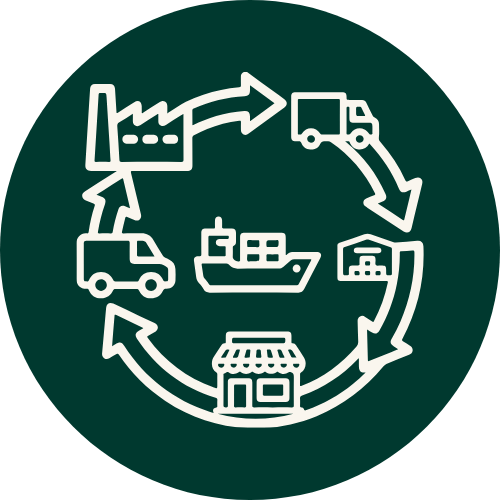
Layer 4: Physical supply chain and interruption realities (where most assumptions break)
Here’s where many organizations discover that they bought the idea of business interruption, not the version that matches their risk.
The Insurance Bureau of Canada explains business interruption insurance in a way that highlights a key issue: business interruption is typically tied to covered events and how the policy is structured, often linked to physical damage concepts unless specialized coverage is arranged.
In geopolitical disruption, interruptions often occur without physical damage:
- Port congestion
- Route disruption
- Embargoes
- Regulatory shutdowns
- Vendor outages
This doesn’t mean business interruption insurance is “bad.” It means business interruption insurance has to be structured around realistic interruption scenarios, often via contingent/dependent forms and carefully negotiated triggers.
3 ways to engineer a risk transfer stack that withstands geopolitical risk
This is where the thought leadership lives: not “buy all the policies,” but engineer the stack so it holds under stress.

Don’t optimize for premium, optimize for claim mobility
In geopolitically correlated events, speed matters. A program that is technically “broad” but practically slow can create more damage than it prevents.

Treat wording as strategy
The market has tried to clarify boundaries around cyber war/state-linked systemic events; the Lloyd’s Market Association publishes cyber war clauses that demonstrate how wordings attempt to define these boundaries. You don’t need to be a coverage lawyer, but you do need to know which clauses create ambiguity in the scenarios you care about.

Use the stack to support Canada’s strategic opportunities
Canada’s opportunity set (critical minerals, energy and tech-enabled services) comes with geopolitical exposure. A well-designed risk transfer stack is part of how Canadian firms pursue growth while controlling downside volatility.
Building a geopolitically resilient risk architecture in Canada
In a geopolitically fragmented environment, risk transfer can’t be evaluated solely by premium, limits or renewal outcomes. It needs to be evaluated by whether it supports:
- Continuity under disruption
- Defensible governance under scrutiny
- And balance-sheet resilience when capital gets tighter
The World Economic Forum’s systemic framing and the Bank of Canada’s emphasis on elevated geopolitical uncertainty and risk premium dynamics are not just macro commentary, they are signals that volatility is not temporary.
For Canadian organizations, the strategic move is not “more insurance.” It’s better architecture: a risk transfer stack that matches how geopolitical risk actually manifests, through cyber, trade, governance, supply dependencies and legal constraint. That’s how insurance stops being an administrative expense and becomes what it really is in this era: strategic infrastructure.
FAQs
A risk transfer stack is the shift from buying policies to building a structure: multiple layers matched to different loss pathways, time horizons, and stakeholders in a geopolitical operating environment. You start by defining what the business can absorb and then engineer the rest, so it supports continuity and balance‑sheet resilience when conditions tighten.
It protects by preventing volatility from turning into cash-flow shock, decision paralysis and execution failure. A stack works because geopolitical loss doesn’t arrive in one clean category. It arrives as clustered disruption: supplier delay + cyber spike + payment friction + governance scrutiny. Layering lets you fund response speed (incident vendors, counsel, forensics, crisis comms), protect leadership decisions under scrutiny, and cover trade/receivable disruption where non-payment can have political DNA. Key principle: don’t optimize for premium; optimize for claim mobility and wording clarity, because speed matters when events are correlated.
By turning resilience into a competitive signal. Canadian organizations that integrate geopolitical scenarios into enterprise risk management (ERM), stress-test supply chains as geopolitical systems, align cyber posture with geopolitical triggers and elevate governance oversight reduce downside. But they also demonstrate durability that underwriters, lenders and counterparties quietly reward.rnrnOn the risk transfer side, treating insurance as strategic infrastructure (a stack engineered to match real loss pathways) protects cash flow and preserves the ability to execute when rules change mid-quarter. Translation: advantage comes from deliberate readiness, not perfect prediction.
Share this article:

Get weekly tips to protect your business!
Subscribe to our LinkedIn Newsletter. Our advisors’ insights will help you Be Risk Ready.
Aliya Daya, Senior Client Executive, specializes in risk management strategies and insurance solutions for the technology sector, as well as disruptive and emerging industries. With more than 25 years of experience in the insurance industry, Aliya serves as a Cyber Technical Specialist and National Mixed Practice Team Lead at Acera Insurance. She specializes in innovation, technology, cyber insurance and privacy breach, political risk, manufacturing / fabrication / wholesale / distribution, hospitality, non-profit and faith-based organizations.
You can reach Aliya at 403.717.5895 or [email protected]
Related reading
- Part 1: Geopolitical and business risk trends for 2026: A Canadian perspective
- Part 2: Managing geopolitical risk in 2026: Technical frameworks for Canadian organizations
Information and services provided by Acera Insurance, Acera Benefits and any other tradename and/or subsidiary or affiliate of Acera Insurance Services Ltd. (“Acera”), should not be considered legal, tax, or financial advice. While we strive to provide accurate and up-to-date information, we recommend consulting a qualified financial planner, lawyer, accountant, tax advisor or other professional for advice specific to your situation. Tax, employment, pension, disability and investment laws and regulations vary by jurisdiction and are subject to change. Acera is not responsible for any decisions made based on the information provided.
Get a quote.
Simply fill out a few details in our online form and one of our expert advisors will get your quote started.